I’m going to be honest, and I am not going to sugarcoat anything here. The opinions I’m expressing aren’t just my own, but also those of other female game developers I’ve worked with and spoken to about your question. This post is the distillation of what they (and I) had to say. Keep in mind that there are always exceptions, but this is the general rule. So what advice would I have for women wanting to work into the game industry?
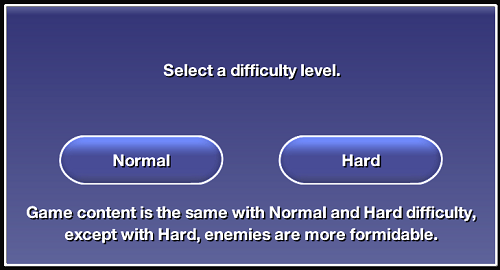
You’re choosing hard mode difficulty
Everything will be harder, no matter what discipline you choose, than if you were a man. You will need to be better and work harder than your peers. You will need to go against culturally-ingrained accepted social values in order to advance. Taking care of family will be harder for you, since crunch tends to be harder on mothers than fathers given most societal gender roles. You have to realize that it won’t ever be fair, and it will almost always be hard. You absolutely need to believe that this is what you want, or you’ll probably burn out.
Advancement and promotion is hard
You’ve got to fight for your promotions much harder than your male peers. You’ll have to challenge the notion that you aren’t as good as they are, and you’ll have to make yourself known as wanting those promotions. This will likely trigger the sort of side-eye name-calling (bossy, bitchy, etc.) that an ambitious woman typically garners in the workplace. The higher you go, the harder it becomes. There are almost no women at the executive level in leadership. This is partially because of gendered stereotypes, but also due, in large part, to the fact that the upper levels of management at the publisher level tend to be very clique-oriented. Breaking in to cliques is very difficult. Breaking into cliques of almost all men is even harder.
It varies from studio to studio
Some studios are better than others about how they deal with women, but some of them are just awful. There are many established “boys club” studios out there where they just won’t treat you as a respected coworker. They tend to be smaller studios without a centralized HR department where they can get away with that sort of thing, but it could happen anywhere that’s sufficiently insulated. Some studios are traditionally better than others, but there will almost always be some level of resistance because of your gender. Even the studios most famous for inclusivity like Bioware will still have some amount of these issues.
You need a thick skin
There will be comments, both from coworkers and fans. If you ever do anything public-facing, you’ll probably get threats and harassment. If you use social media and you do anything that involves the player community, you’ll probably get harassment and death threats. You really need to be able to let this stuff roll off your back, because it won’t ever stop. If it comes from the public, it will almost always be gendered as well. If you’re into video games already, you’ve probably already experienced this in online play. It’s like that, except more so because there will be many more of them.
Never stop learning, growing, or improving on the job
You’ve got to push for a work-life balance, but you should constantly be trying to learn and grow. Take what they give you, excel at it, and go back for more. If this is what you want, don’t let them push you around. Bring your own perspective to development, cultivate it, and improve it. Don’t be afraid to incorporate advice from others, but always keep improving.
Most people won’t believe you if you tell them it is harder for you
Part of the issue is simply that it isn’t any one thing, or even a handful of larger things. There are hundreds of little problems with being a female developer, from being presumed to be a receptionist or HR to having people second-guess your code to being predisposed to judging your work because of your gender. Each issue isn’t necessarily a deal breaker by itself, but the aggregate of all of these little issues combined serves as a heavy disadvantage overall. Unfortunately, since there are so many little issues combining together, it’s also nigh impossible to point at any single one as the root cause, and it’s difficult for people to grasp that concept unless they’ve experienced it.
It’s hard being a woman in game development, but it can also be extremely rewarding. If making games is something you dream of and want to do, there really is no substitute for it. But through whatever quirk of fate, you happen to identify as a woman. If more women push into this arena, it will definitely be easier in the future. But until then, you’re going to have to deal with being a pioneer in the workplace, and it’s going to require some serious effort. It isn’t for everyone, and it’s significantly harder for women. But it won’t get better unless more women blaze trails into the industry. If this sounds like something you’re willing to take on, I wholeheartedly salute and encourage you.




- Comment
- Reblog
-
Subscribe
Subscribed
Already have a WordPress.com account? Log in now.
 Moe's Backup Blog